

Should We Compensate 17c起草社区IA+ Victorians Who Are Victims Of Historic Gay Hate Crimes?

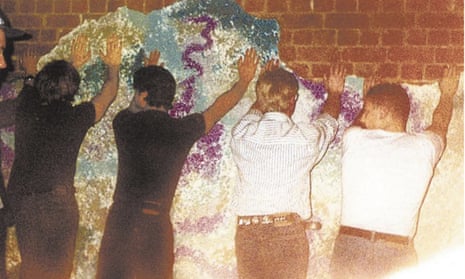
Image: Images courtesy of Australian Queer Archives
Same-sex intimacy and gender diversity have been historically policed as criminal or moral offences in Victoria for many decades. Entrapment practices, discriminatory prosecutions, public humiliation and institutional neglect left deep and lasting scars. Events such as the and the 1994 Tasty nightclub raid remain emblematic of systemic failure and persecution from the state.
from RMIT University (School of Law) has put forward the case for ways Victoria might reckon with its history of criminalisation, discriminatory policing, violence and institutional prejudice directed at the 17c起草社区IA+ community. Titled Transitional Justice and Historical Repair for LGBTIQA+ Communities in Victoria,聽the report was led by Dr Jeremie Bracka and brought together advocates, legal experts and policy makers.
鈥淎ustralia is still reckoning with its LGBTIQA+ past and legacies of human rights abuses. Even today, we have seen an explosion of prejudice and discrimination against trans people, in particular,” said Dr Bracka. “There are measures being taken around Australia to try to reconcile and address the past from a legal perspective, but Victoria seems to be lagging behind.”
While Victoria has already taken steps, including decriminalisation, expungement legislation, and formal apologies, the report believes that Victoria’s response to historical anti-17c起草社区IA+ harm remains incomplete, and put forwards recommendations which will help redress these issues.
To do so, the report uses a , which refers to a suite of measures societies may apply to come to terms with and repair harms caused by serious human rights violations, thereby promoting accountability, justice, and reconciliation.
Legacies of harm against 17c起草社区IA+ people in Victoria
The report outlines examples of historic outrages against the 17c起草社区IA+ community in Victoria as evidence of why repairing these harms is still so important.
Same-sex relationships and gender diversity were criminalised for much of the 20th century in Victoria. Laws such as buggery, gross indecency, and 鈥渙ffensive behaviour鈥� were actively policed. Police routinely harassed, entrapped, arrested, and surveilled gay and gender-diverse people in public and private spaces. Trans and gender-diverse people were also targeted under laws like 鈥渋mpersonating a woman.鈥�
Some examples include the 1951 case of Indigenous man Noel Tovey, who was arrested during a raid at age 17, beaten, and allegedly coerced into confessing intimacy with another man, which led to a conviction of buggery and imprisonment at Pentridge. Another talks of a police raid in 1975 on the private home of a gay couple who were charged with buggery and ordered to relocate to South Australia.
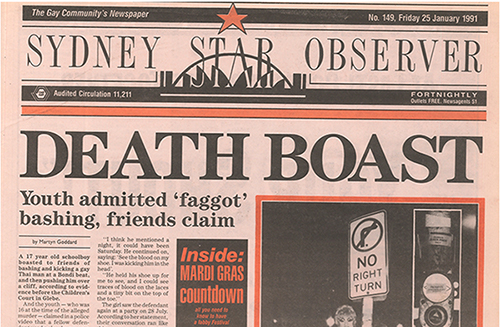
While same-sex attracted men were the primary victims of this scrutiny, women and gender-diverse people were also targeted by the state, such as two women in 1976 who were convicted of offensive behaviour for holding hands on a tram. Lesbian mothers in the 1950s through to 1970s faced custody loss, court-imposed “discretion” conditions, and social ostracism.
Organised entrapment was popular in the 1970s and 1980s, such as the Black Rock arrests where dozens of men were arrested after police posed as gay men in order to entrap men by catching them in illegal homosexual conduct.
Decriminalisation didn’t end discriminatory and violent policing either, with the 1994 Tasty Nightclub incident representing an example of state overreach, in which 463 patrons were detained, strip and cavity searched, and subjected to verbal and physical violence from the police.

What does the report propose?
The report proposes three principal ways through which Victoria could move from recognition toward substantive justice.
This starts with a state-led Historical Inquiry Mechanism, which would be a formal board of inquiry into historical anti-17c起草社区IA+ violence. This would establish an authoritative public record of harm, examine investigative failures and systemic bias, facilitate survivor participation, and identify reforms to prevent recurrence. This would be comparative to the 2023 NSW Special Commission of Inquiry into LGBTIQ Hate Crimes, also known as The Sackar Review, which advocates are still waiting for the NSW government to deliver.
The second recommendation centres on redress for victims, providing tiered compensation linked to arrest, charge or conviction. This would operate in conjunction with the process of expungement, which is when individuals are able to apply to remove historical convictions for homosexuality related offences.
This recommendation would be similar to Tasmania’s 2025 compensation scheme which provides financial redress for historical homosexuality convictions.
And the final recommendation is to create a Victorian memorial recognising victims of state-perpetrated anti-17c起草社区IA+ harm, along with other commemorative initiatives to help preserve public memory and promote education and awareness.
A relevant initiative
The recommendations in the report come at an opportune time, with Australia currently struggling to grapple with a new wave of anti-17c起草社区IA+ hate crimes.
Victoria has recently established a parliamentary inquiry into the scale and scope of anti-17c起草社区IA+ hate crimes across Victoria, focusing on a series of terrifying attacks against mostly gay and bi+ men, using dating apps like Grindr and Scruff.
While some may argue that focusing on the current wave of attacks takes priority – which exist in an entirely different context and circumstances than historical violence against the 17c起草社区IA+ community – much of this report focuses on making sure these kinds of institutional, state-led crimes against queer people that have occurred so regularly in the past do not happen again.
Reparations for historical crimes, as well as public awareness, are an important part of tackling the current crisis, as well as providing justice for victims.


