

The Sunshine State’s darkest chapter

Image: Joh Blejke-Petersen, the former Premier of Queensland.
鈥淚 AM against the dirty and despicable acts these [homosexual] people carry out. You can鈥檛 get any beast or animal that is so depraved to carry on the way they do.鈥�
Queensland鈥檚 early response to the HIV and AIDS epidemic was set back for years by the actions of the man quoted above: Joh Bjelke-Petersen 鈥� the state鈥檚 former premier and one of the country鈥檚 most controversial.
In the 1980s, the gay community across the country was mobilised to address the epidemic and in most states, it was given a key role in the country鈥檚 response: a role that was supported by state and federal governments who encouraged a partnership approach between key stakeholders. It鈥檚 a response that has long been credited as defining best-practice for health authorities both here and around the world.
However, not every state contributed to this pioneering response. In Queensland the government of Bjelke-Petersen would have no part in what the rest of the country was doing to prevent the deaths of people living what he called 鈥渁 degenerate lifestyle鈥�.
Earlier this year a release of cabinet documents from 1985 prompted a review of the epidemic鈥檚 history in Queensland 鈥� documents that revealed the extent at which the Bjelke-Petersen government went to prevent an effective response, essentially leaving the state鈥檚 gay community to fend for themselves in their greatest time of need.
Homosexuality was also still considered a crime in Queensland throughout the 1980s, which added to the challenges the community faced.
Phil Carswell is an Order of Australia honouree for his work in the HIV sector at the beginning of the epidemic in Victoria who also played a crucial role supporting the establishment of the Queensland AIDS Council (QuAC) in October 1984.
鈥淕iven the hostile environment, the gay community was not particularly large or well organised so when AIDS arrived, there was a very small pool of people ready and able to fight for what was taken for granted in other states,鈥� he recalled.
鈥淚n terms of the gay community itself, I was told of people being arrested outside gay venues, strip searching on the street and examples of young gay men stopped outside venues, being interrogated and when they revealed that they had engaged in gay sex, being arrested and subsequently jailed.
鈥淭he evangelical homophobia of the Lutheran Premier and his cabinet gave free rein to the basest forms of homophobic violence in the police, media and the wider community.
鈥淯nderstandably, gay men and lesbians either retreated into the closet or escaped south as soon as they could.鈥�
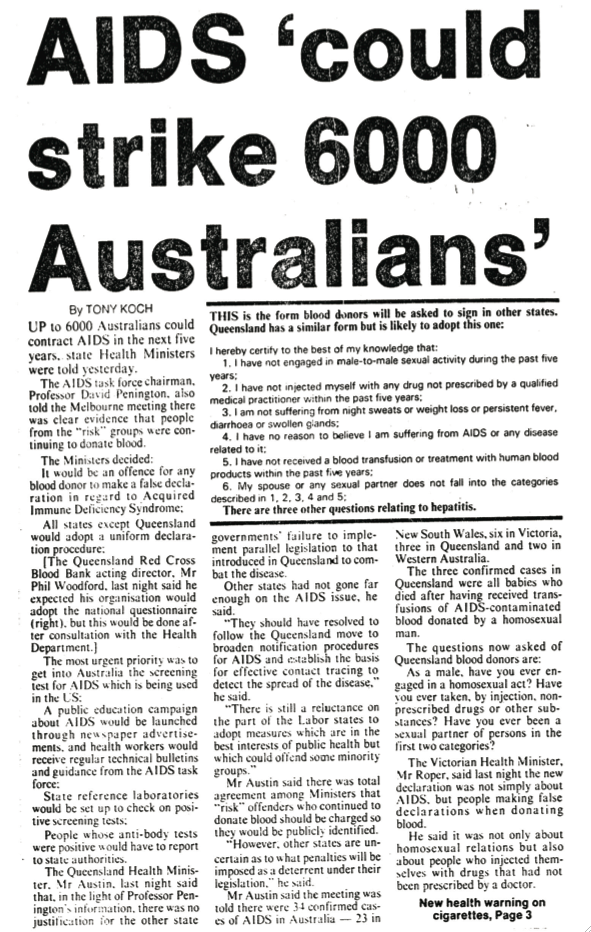
QuAC formed with 14 members amid an atmosphere of paranoia and fear, and within a few months it was publishing material on safe sex practices 鈥� years before official health bodies did it themselves.
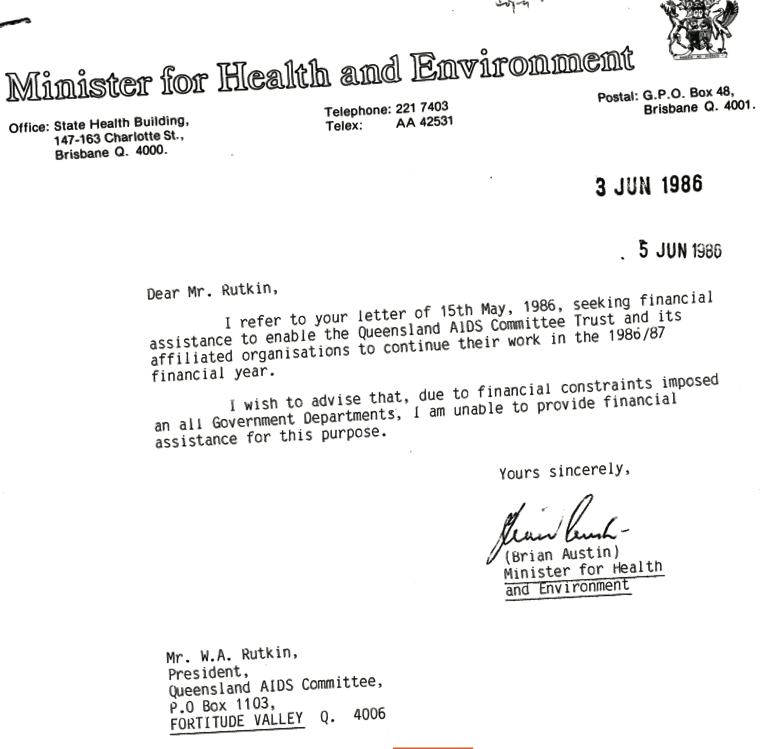
However, funding for the newly-formed organisation was impossible to come by at a state level, and commonwealth funds had to be passed on in secret 鈥� via brown paper bags 鈥� by the Sisters of Mercy and Sister Angela Mary.
The release of the 1985 cabinet documents only reaffirmed the dark chapter in Queensland鈥檚 early response to HIV and AIDS.
For example, the minutes reveal how the cabinet considered the issue of AIDS during eight meetings throughout 1985 and what it could do to prevent the its spread in Queensland.
An incident at a Sydney pool that hosted an event for the Sydney Mardi Gras sparked national concern over how HIV was transmitted.
鈥淎s a parent, I would have strong reservations about letting young people compete in a pool that was used for such a sick event as a gay swimming carnival,鈥� Queensland鈥檚 welfare, youth and ethnic affairs minister Geoff Muntz said at the time.
鈥淚t seems these people who promote such an immoral, unnatural and deviant lifestyle are turning up everywhere in NSW.
鈥淵ou鈥檒l never hear of a gay mardi gras or gay swimming carnival in Queensland.鈥�
For Carswell, the papers confirmed that 鈥渁 vicious and ideological government鈥� had many ways to enforce its agenda.
鈥淚 was upset with what Joh鈥檚 government had done long before the papers were released,鈥� he said.
鈥淚t used all government departments to stifle the AIDS council, it refused charitable status to the group, it enabled and encouraged police behaviour that went against good public health principles and it politicised the public servants responsible to do the same.
鈥淚t refused to provide funds, it refused to answer correspondence and it breached confidentiality, which just supercharged the race back into the closet and away from prevention, treatment and care.
鈥淚t confirms that what I knew was true, that the [Bjelke-Petersen government] did more than any other in Australia to victimise and blame gay men.鈥�
Dr Wendell Rosevear was also involved with the epidemic from its earliest days and often faced the catastrophic consequences of the then-government鈥檚 ignorance and refusal to act.
鈥淚 remember those homophobic days well,鈥� he said.
鈥淏jelke-Petersen said 鈥榯here are no gays in Queensland鈥� and he was almost right as many guys would escape to Sydney to come out as it was too toxic in Queensland.
鈥淭here, without any family or peer support or knowledge of HIV and safe sex, they often took risks to 鈥榝it in鈥�, only to get HIV and come home to say 鈥楳um and Dad, I鈥檝e got AIDS and I am gay鈥�.
鈥淚 cared for guys dying at home whose parents didn鈥檛 even know, such was the secrecy and denial,鈥� Rosevear continued.
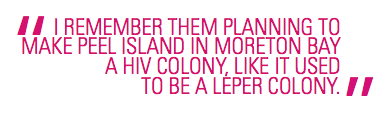
鈥淚 remember them planning to make Peel Island in Moreton Bay a HIV colony, like it used to be a leper colony.
鈥淥ur main role then was to provide palliative home care for guys dying at home as we had no anti-HIV drugs. It was popular for politicians to 鈥榞ay bash鈥� and seek votes in AIDS fear while moralising. My learning teaches me that the most judgemental people usually have the most to hide.鈥�
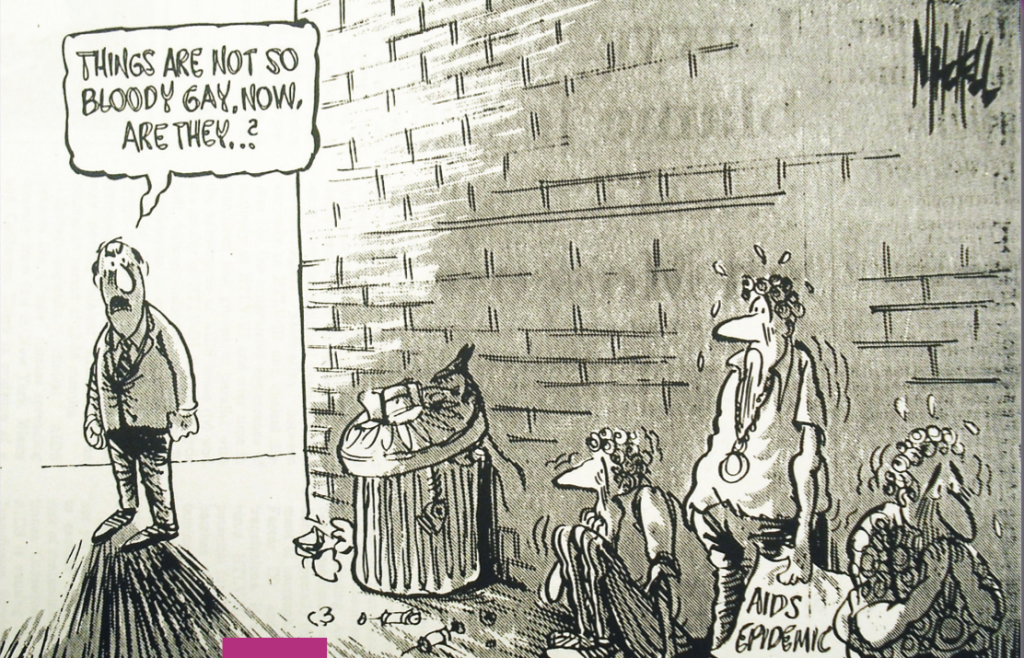
It was also common knowledge the state government once condoned police brutality of the LGBTI community.
鈥淚t wasn鈥檛 anything official, per se, it was always communicated through smoke and mirrors and passed down through the levels of the force,鈥� said Jill Bolen, a former chief superintendent in Queensland Police who was outed as a lesbian during a 1977 鈥渨itch hunt鈥�.
鈥淲hen there were no sanctions against the homophobic behaviour of senior police officials, this of course gave permission to other officers that they could do anything they wanted.鈥�
Many gay men also avoided seeking HIV tests and/or treatment for months, especially after police raided abortion clinics and had confidential information compromised.
鈥淭hose raids were just terrible, absolutely terrible,鈥� Bolen recalled.
鈥淭he confidence of so many women was just utterly betrayed for political purposes. I had a friend involved in it and what I saw through them was so shocking.
鈥淎 lot of the men I knew who had contracted HIV wouldn鈥檛 open up about their status until they were very sick.
鈥淭he raids along with obviously everything that was going on in relation to how gay men were being treated by police and the government, of course contributed to preventing many men from seeking testing and treatment.鈥�
The election of the Goss Labor government in 1989 and the subsequent decriminalisation of homosexuality a year later allowed for a closer relationship between QuAC and the state government. It also saw funding expansion for the organisation and the state鈥檚 response to the epidemic markedly improved to become consistent with the rest of the country.
While it may be almost 27 years since Bjelke-Petersen鈥檚 era came to an end in Queensland, for many who lived through it some of the residual effects from the state鈥檚 bleak initial response to HIV and AIDS still remains.
鈥淭his homophobia is still being felt today,鈥� Carswell said.
鈥淏oth in the ignorance of some dwindling numbers of people in the general community and in terms of self-loathing and fear, even today, amongst modern members of the LGBTI community in Queensland.鈥�
__________________________________
**This article was first published in the , which is available now. 聽in Melbourne, Sydney, Brisbane, Adelaide, Canberra and select regional/coastal areas.
Read聽the April聽edition of the 17c起草社区 in digital format:
__________________________________


It’s important to remember how oppressive the Joh government in Queensland was, and to realise that this oppression cost lives. It should also be noted that those of us living in Queensland were revisited by a doggedly anti-gay government recently under Newman and Springborg, and that the return of this homophobic mob remains a very real prospect. Newman/Springborg also refused to fund QuAC (and in fact stripped it of the funding it already had) and broke the partnership response to the epidemic which had served Australia so well, instead creating the Government HIV Foundation, which persists to this day. The sooner we get rid of the HIV Foundation and return to a fully-funded AIDS Council, the better off we will all be.